Snorkel Mask vs. Dive Mask — Which Is Better? | Comparison 2026
Snorkel mask vs. diving mask – the key facts at a glance:
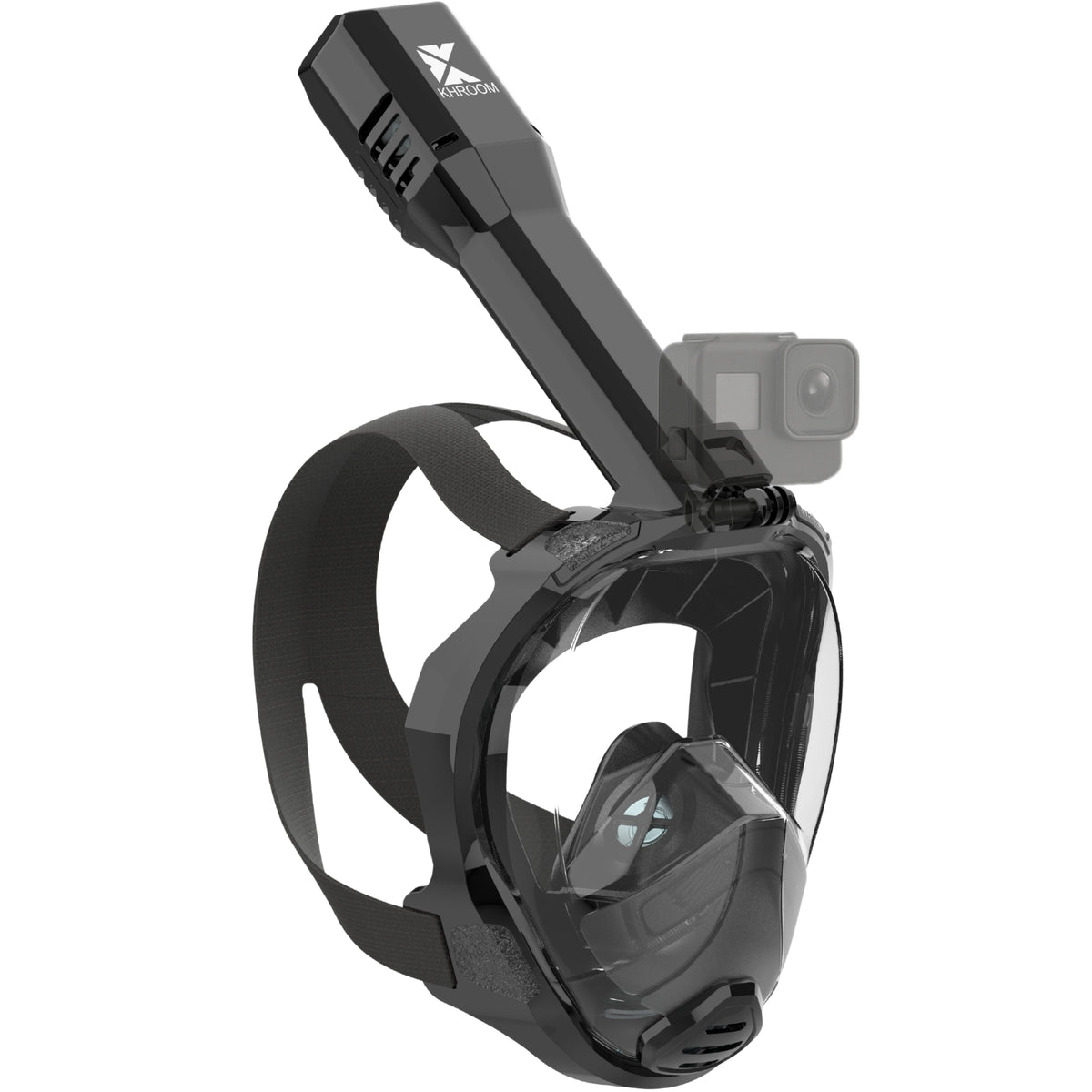
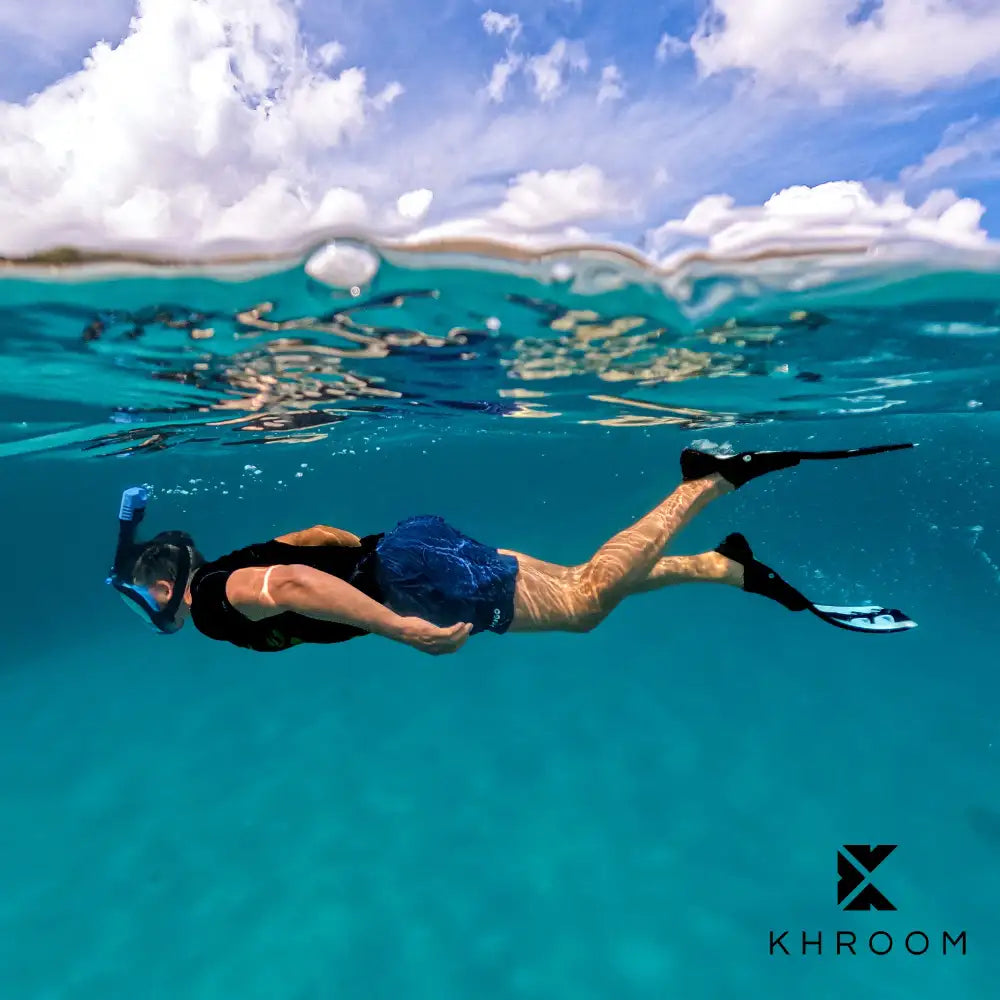
Full-face snorkel mask: You breathe completely naturally through your mouth and nose, without a mouthpiece. Plus a 180° field of view, anti-fog to prevent misting, and a dry-top snorkel that keeps water out.
Diving mask with snorkel: More compact and better suited for diving deeper, but you can only breathe through your mouth via a mouthpiece, the field of view is smaller, and the lens fogs up faster.
Our recommendation: For the vast majority of holidaymakers, families and beginners, a full-face snorkel mask is the more comfortable choice. If you also want to dive down a few meters now and then, go for the Seaview Pro Plus with pressure equalization.

If you want to get into snorkeling, you'll quickly face a fundamental decision: full-face snorkel mask or a classic diving mask with a separate snorkel? Both systems work – but they feel completely different. In this comparison, we'll show you how they differ and which mask suits you best.
1. What is a snorkel mask?
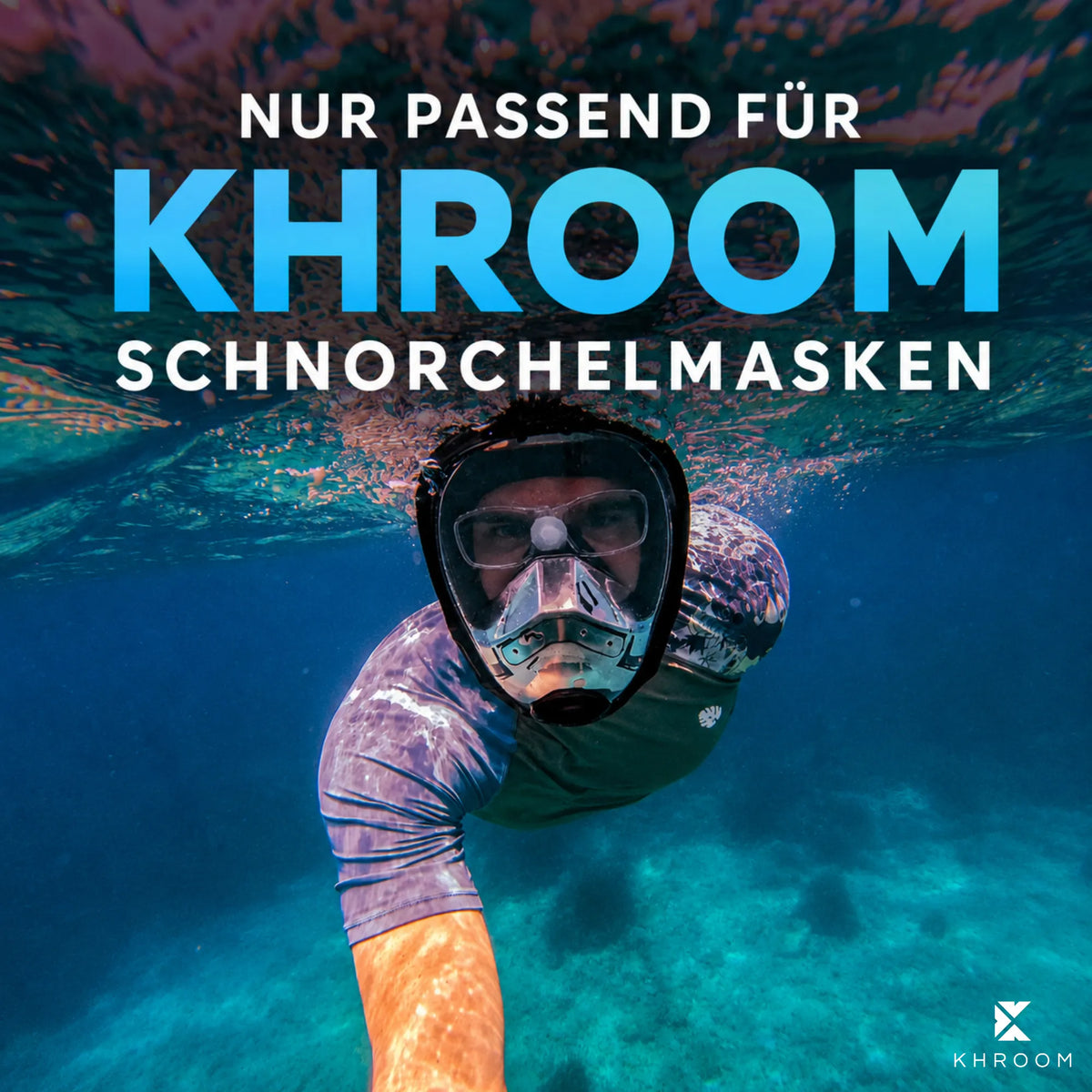
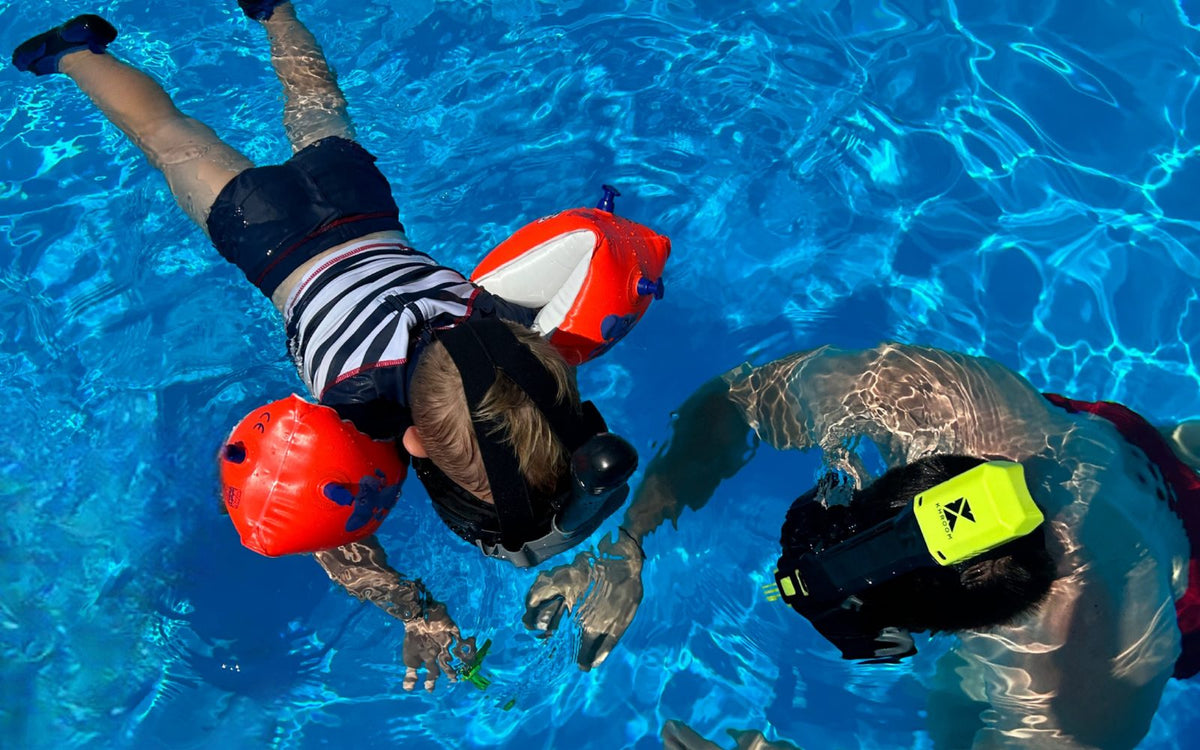
A full-face snorkel mask covers your entire face. The mask and snorkel form a single system – you put it on and breathe naturally through your mouth and nose right away, just like on land. No mouthpiece between your teeth, no separate snorkel to hold in place.
The result: you focus on what's happening beneath you instead of on your gear. Most people forget they're even wearing a mask after just a few minutes.
On top of that, there's a 180° panoramic field of view that gives you a completely different perspective on the underwater world than a classic diving mask. Well-designed models like our Seaview Pro also feature an anti-fog system, a dry-top snorkel to prevent water from getting in, and separate air channels with check valves.
2. What is a diving mask?
A classic diving mask (also called a dive mask) only covers your eyes and nose. The snorkel is a separate piece attached to the mask strap. You hold the mouthpiece between your teeth and breathe exclusively through your mouth.
The big advantage: with a diving mask, you can also dive deeper, because you equalize pressure through your nose – pinch your nose and blow gently. For freedivers and experienced apnea snorkelers, this is the more natural choice.
The downsides, however, are noticeable: the mouthpiece becomes uncomfortable after a while, many people experience a gag reflex, and breathing solely through the mouth feels unnatural. The field of view is also limited to the shape of the goggles.
3. The direct comparison
- Natural breathing through mouth and nose
- 180° panoramic view
- No mouthpiece, no gag reflex
- Anti-fog and dry-top snorkel
- Optical inserts built directly into the mask
- Only shallow diving (exception: Pro Plus)
- Compact, low internal volume
- Pressure equalization via the nose
- Good for deep diving
- Mouth breathing only, via mouthpiece
- Limited field of view
- Lens fogs up more easily
| Criterion | Snorkel mask (full-face) | Diving mask + snorkel |
|---|---|---|
| Breathing | Natural, through mouth and nose | Mouth only (mouthpiece) |
| Field of view | 180° panoramic | Limited (goggle-style) |
| Comfort | No mouthpiece, no gag reflex, intuitive right away | Mouthpiece can press uncomfortably, takes getting used to |
| Fogging | Anti-fog system (on high-quality masks) | Fogs up more easily, needs preparation |
| Diving down | Shallow only, up to around three meters. Exception: Seaview Pro Plus with silicone nose and pressure equalization | Yes, pressure equalization via the nose |
| CO₂ safety | Depends on the design: separate air pathways and check valves are a must | Not an issue – open system |
| Glasses wearers | Optical inserts from –8.0 to +8.0 dpt built directly into the mask | Optical lenses from an optician, usually much more expensive |
| Learning curve | Barely any – put it on and start snorkeling | Mouthpiece breathing, pressure equalization and snorkel handling take practice |
| Ideal for | Beginners, families, holidaymakers, casual snorkelers | Experienced divers, freedivers, apnea athletes |
4. Diving down: How deep can you go?
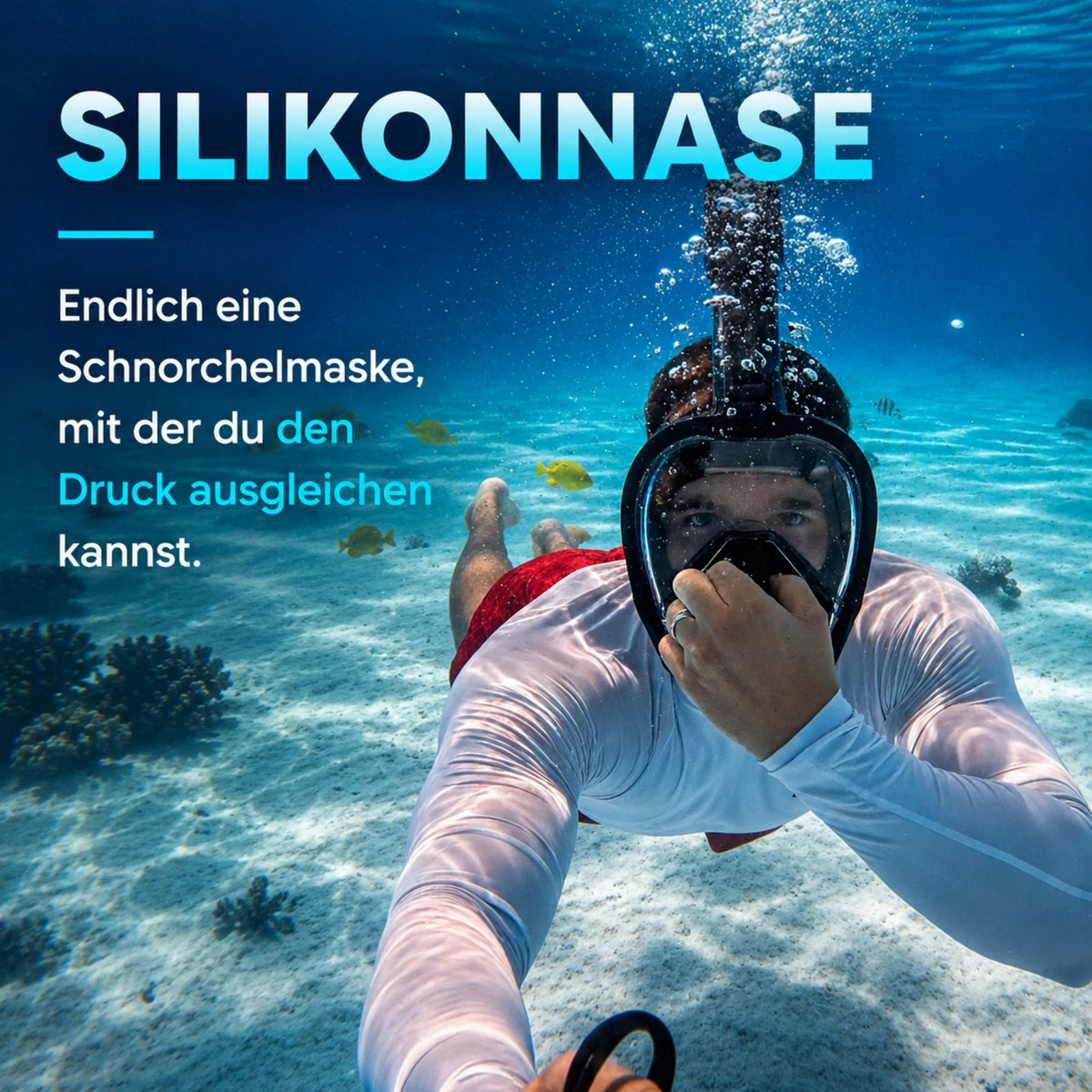
With a normal full-face snorkel mask, you can only dive down shallowly, up to around three meters. The reason: you can't reach your nose, so you can't equalize the pressure. Go any deeper and your ears will quickly start to feel uncomfortable.
With a classic diving mask, you pinch your nose to equalize the pressure. That's why it's the better choice for freedivers and anyone who regularly dives deep.
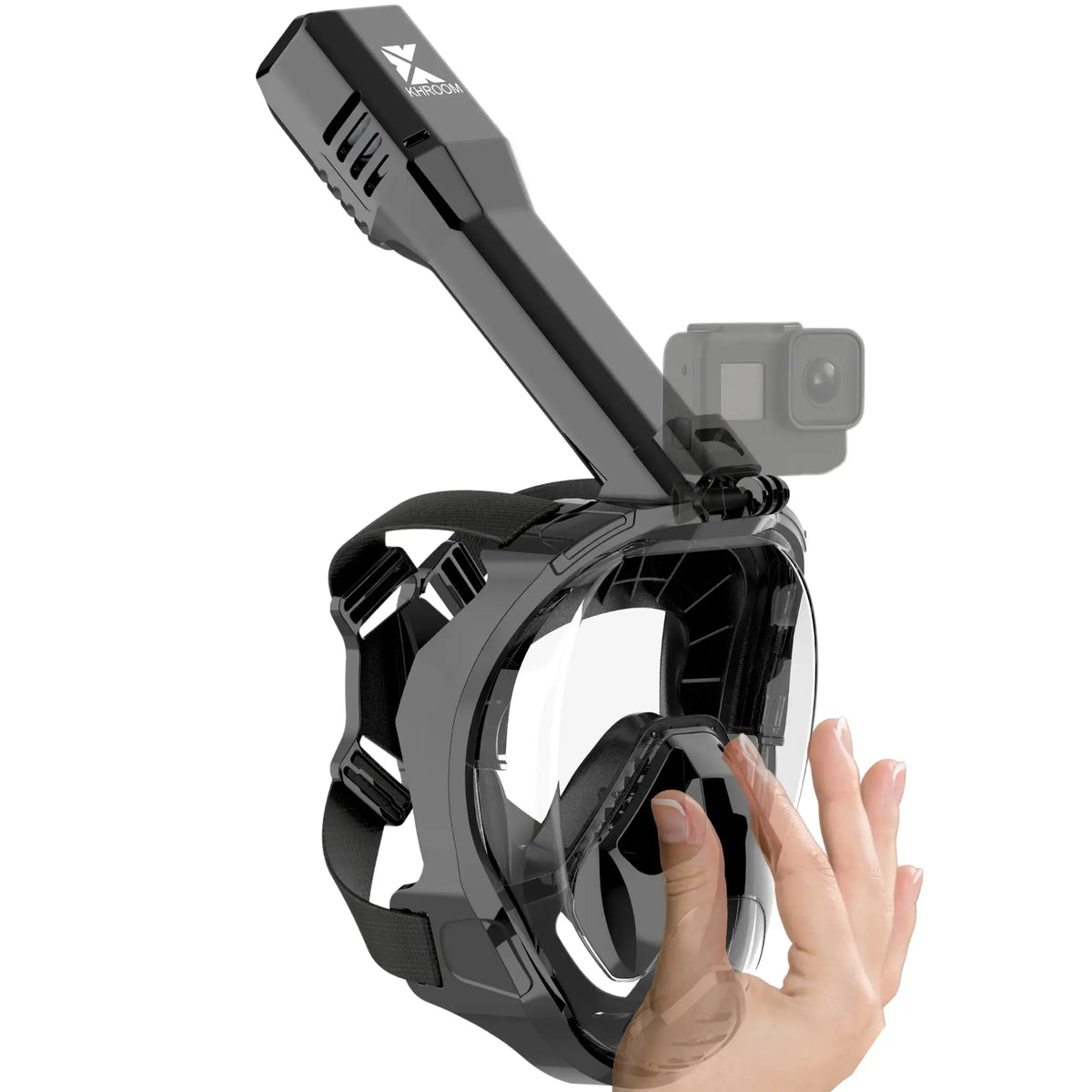
There's also a solution in between: the Seaview Pro Plus is a full-face snorkel mask with a silicone nose and pressure equalization. You pinch your nose shut just like with a diving mask, so you can dive down a few meters deeper too – with all the benefits of a full-face mask at the surface.

5. CO₂ safety – the underestimated factor
When it comes to "snorkel mask or diving mask?", one point is often overlooked: CO₂ safety. With a classic diving mask, this isn't an issue – you breathe in and out through the open snorkel, and the used air escapes directly.
With full-face snorkel masks, it depends on the construction. If separate air passages and check valves are missing, exhaled, CO₂-rich air can be breathed in again. This can lead to headaches, dizziness, and in the worst case, unconsciousness in the water. A mask that's too big is also a risk, as it increases the dead space – for example, when children wear an adult mask.
- Seaview Pro: SGS test report on the CO₂ content of the inhaled air, averaging 0.29 vol.%
- Seaview X: DEKRA test report on CO₂ content
- Seaview Kids: TÜV Rheinland test report (test sample Seaview BC, identical construction)
- Seaview Pro Plus: proven Khroom valve system with separate air passages and check valves, plus pressure equalization
You can download the test reports yourself: Test reports and evidence
More on this topic: Are full-face snorkel masks dangerous?
6. Which mask suits you?
You want to snorkel relaxed at the surface: Then a full-face snorkel mask is the right choice. You breathe naturally, see more, and don't need to learn anything. Our recommendation: the Seaview Pro, also available as a set with long fins.
You want to dive down occasionally too: The Seaview Pro Plus has a silicone nose pocket for pressure equalization, just like a diving mask. Also available as a set with short fins.
You're a freediver or apnea athlete: Then a classic diving mask with a separate snorkel is the better choice. The small internal volume makes pressure equalization easier at greater depths.
You have a narrow face: Standard masks often don't seal well on narrow faces. The Seaview X is made for narrow face shapes.
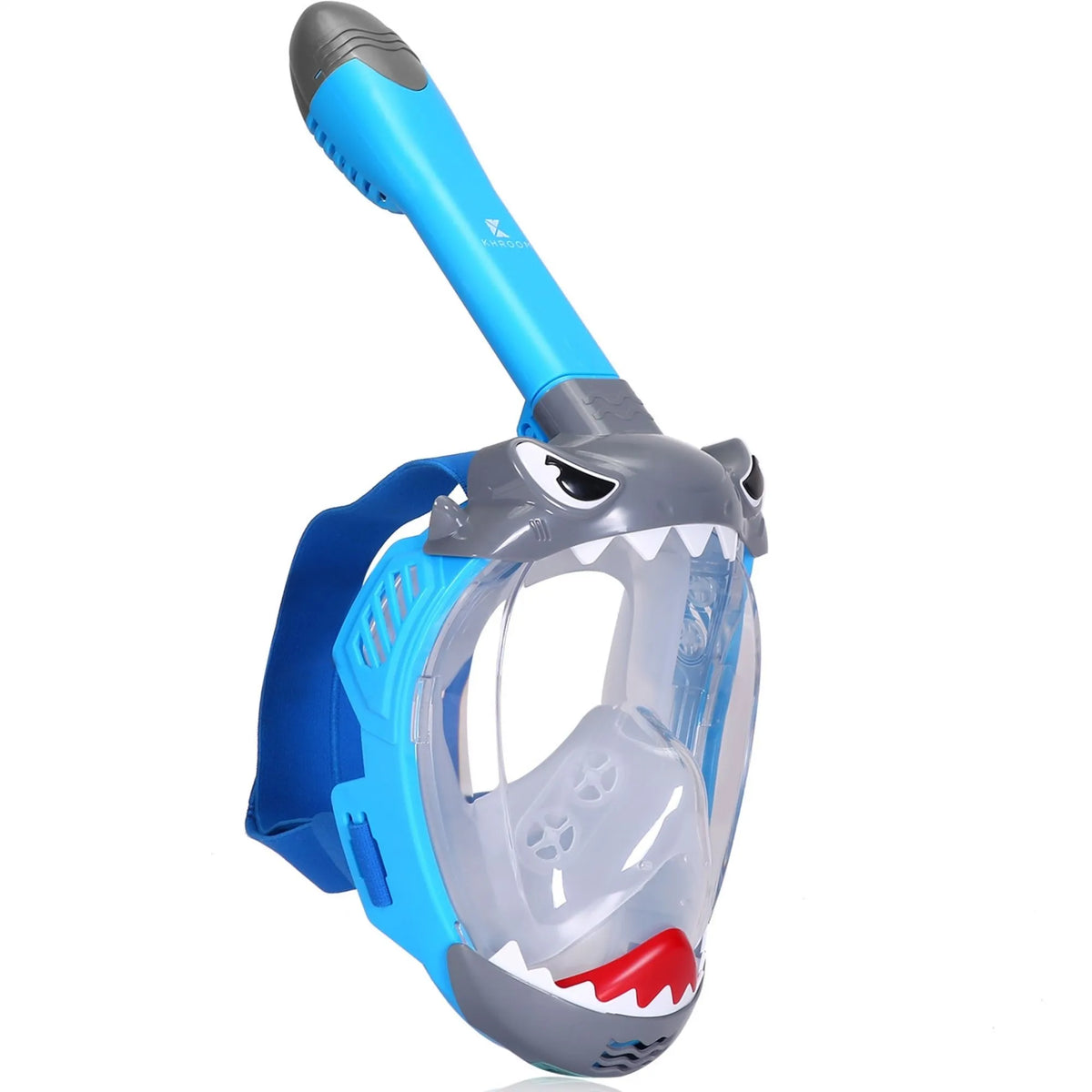
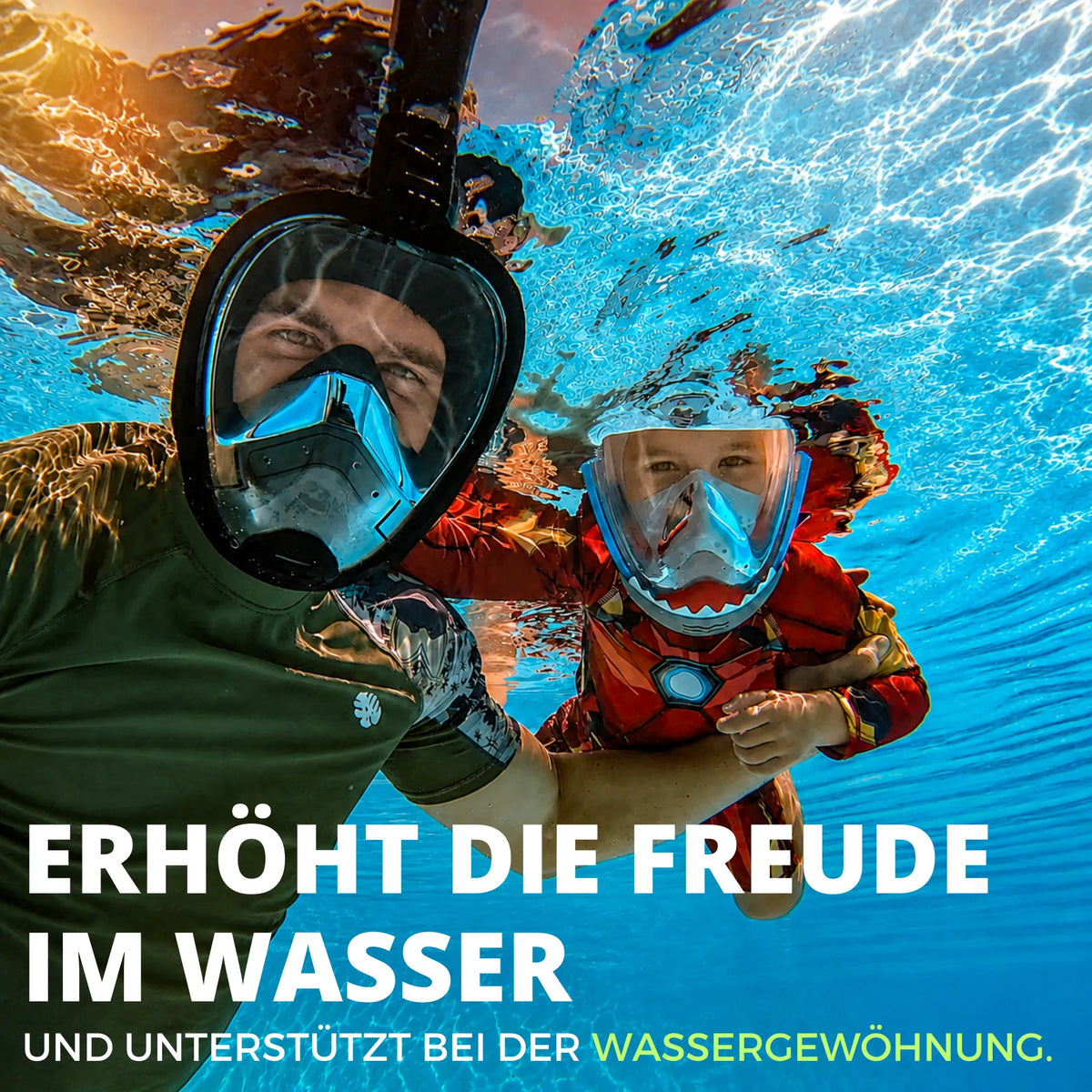
You snorkel with children: Children need a child-sized mask, because an adult mask won't seal properly and has too much dead space. The Seaview Kids is designed for children aged 3 to 10. More on this: Safe snorkeling with children.
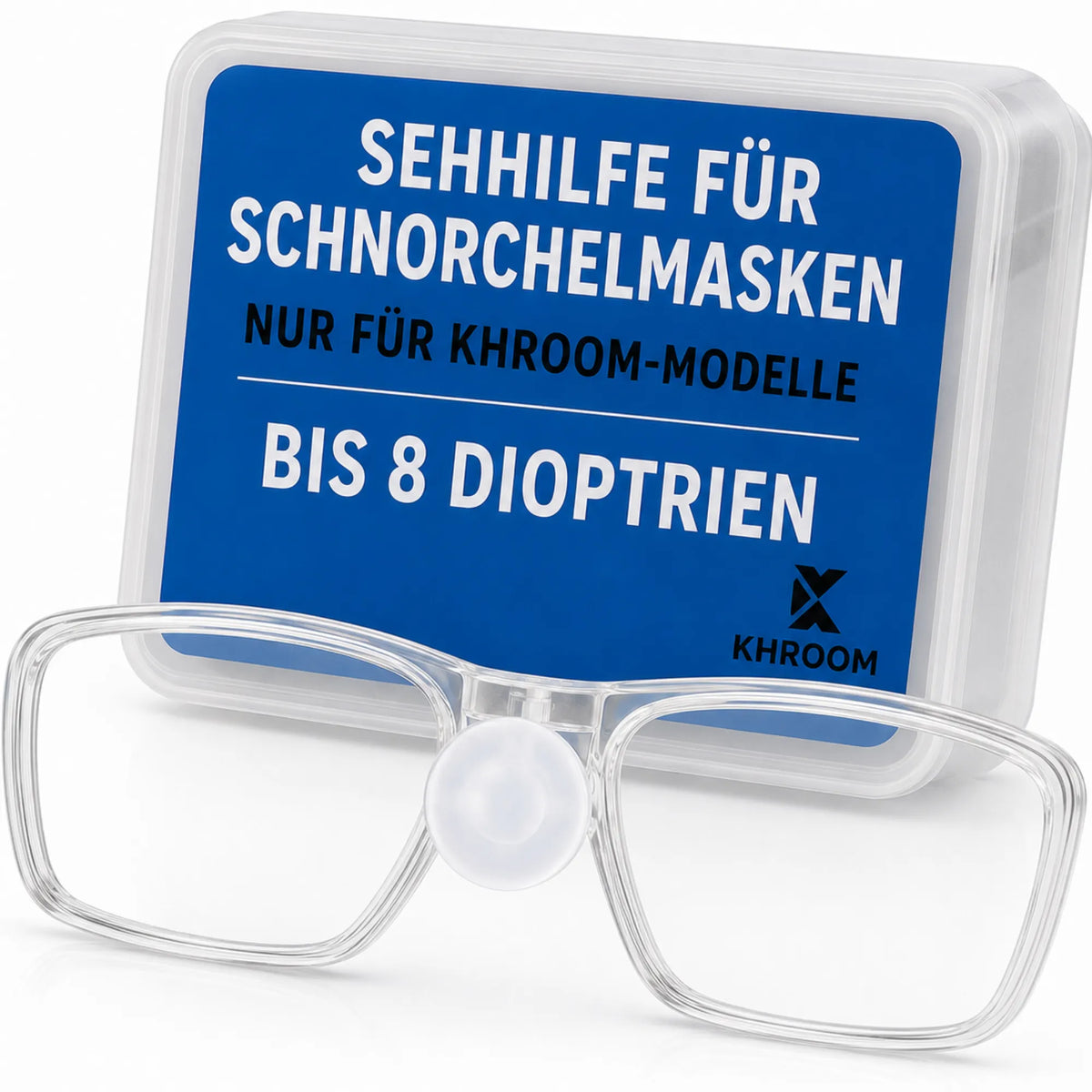
You wear glasses: With a full-face mask, you don't need expensive custom-made lenses from the optician. Our optical inserts from –8.0 to +8.0 diopters can be fitted into the mask without any tools. More details: Snorkel mask for glasses wearers.
7. Our masks in detail
Khroom Seaview Pro

Our all-rounder for holidays, family outings and getting started: 180° panoramic view, anti-fog, dry-top snorkel and separate airways with check valves. For the Seaview Pro, SGS measured the CO₂ content of the inhaled air: an average of 0.29 vol.%. Available in several sizes.
Khroom Seaview Pro Plus

For those who want more: The Seaview Pro Plus features a silicone nose piece for pressure equalization – still a rarity among full-face masks. Plus a quick-release buckle for easy removal and the proven Khroom valve system.
Khroom Seaview Kids

The full-face mask in kids' sizing for ages 3 to 10: soft silicone, a kid-friendly design and a TÜV Rheinland test report on CO₂ levels (test sample Seaview BC, identical construction).
8. Matching accessories
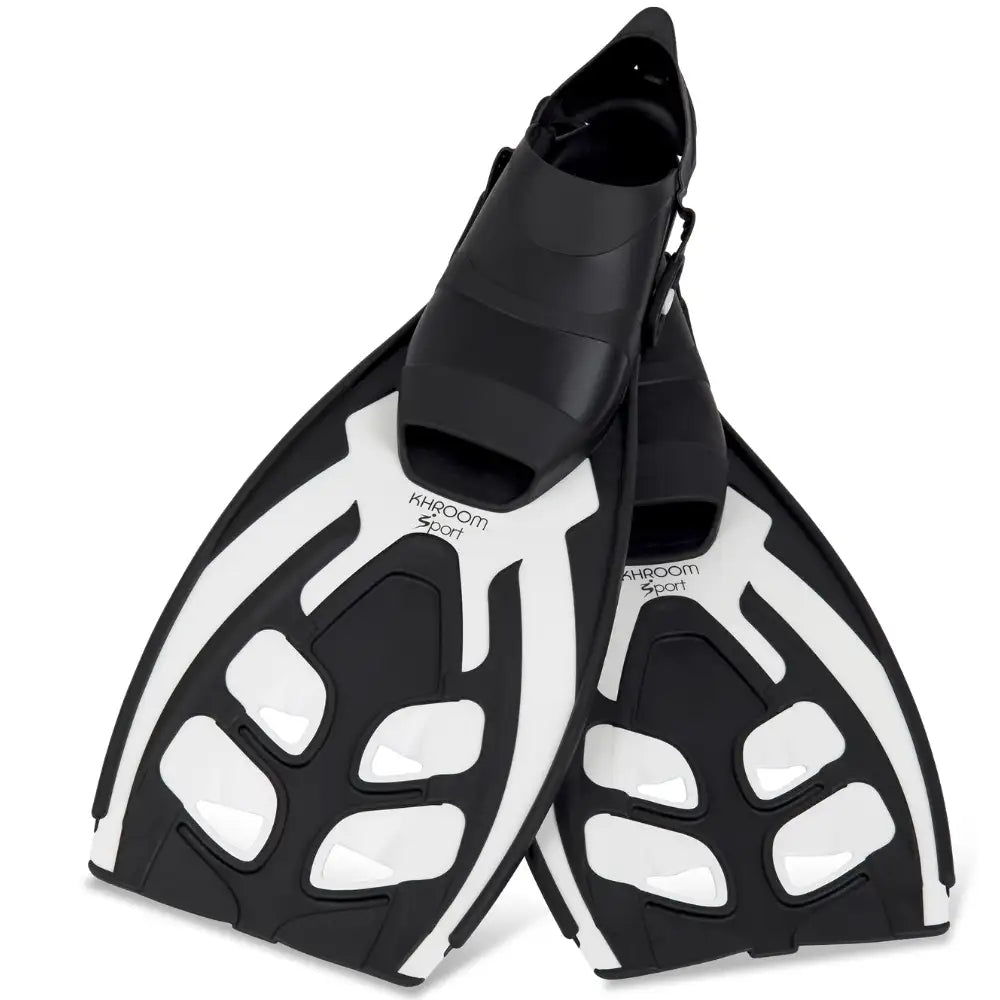
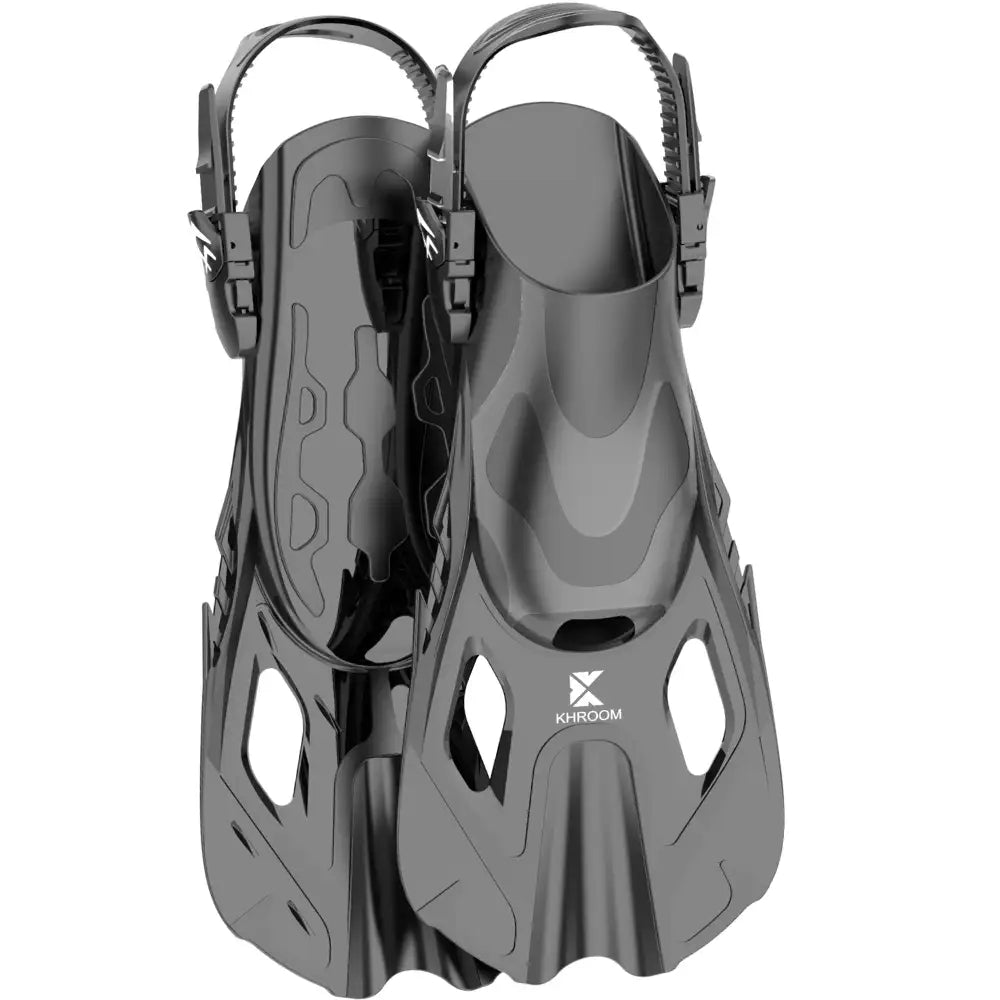
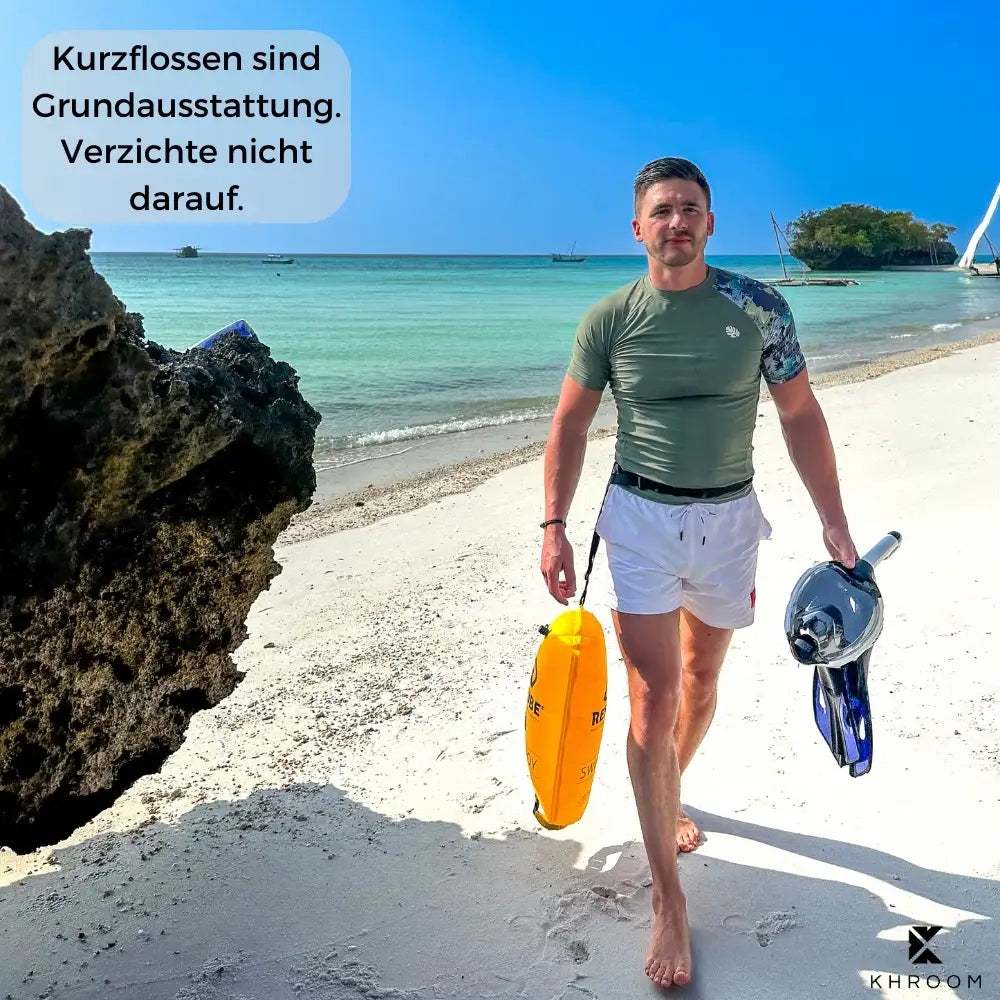
- Short adjustable fins – compact, travel-friendly, gentle propulsion. Comparison: Fin comparison
- Neoprene socks (3 mm) – protection from coral, sea urchins and hot sand. When do you need them?
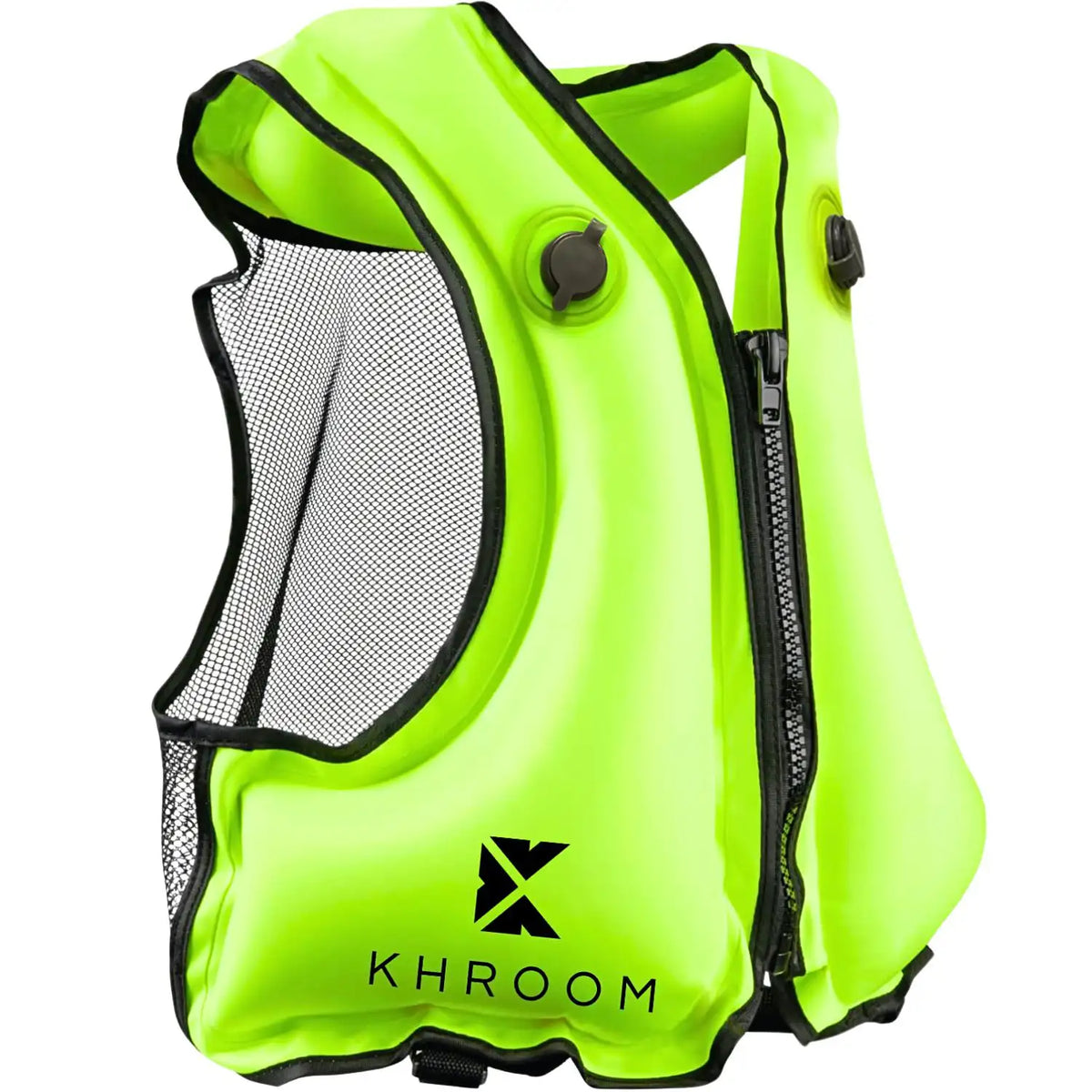
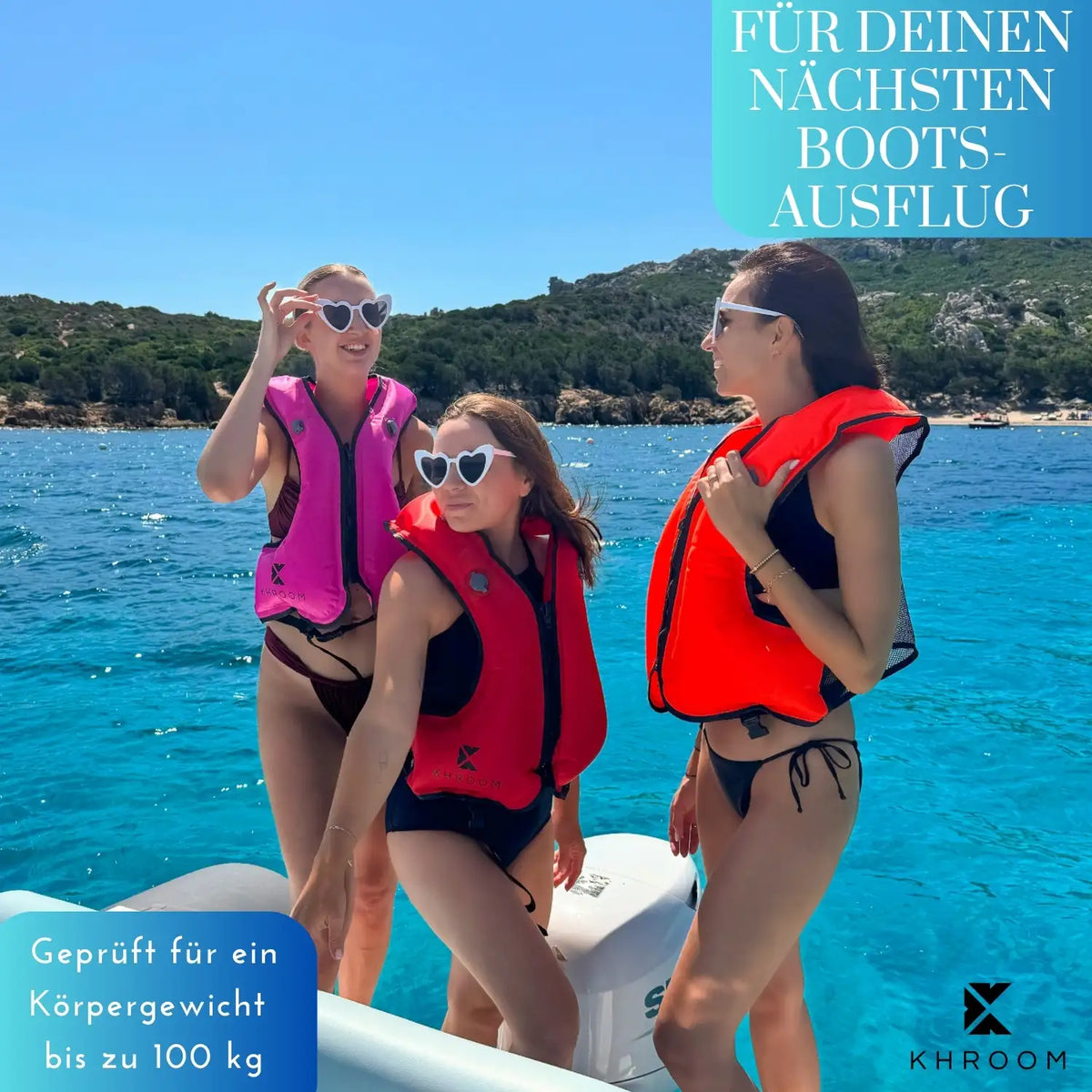
- Inflatable swim vest – more buoyancy and safety for beginners and in currents
- Optical inserts – for glasses wearers, –8.0 to +8.0 dpt
- Spare parts – snorkels, valves and accessories for all masks
9. Conclusion: snorkel mask or diving mask?
For relaxed snorkeling at the surface, the full-face snorkel mask is the more comfortable choice: natural breathing, a wide field of view, barely any learning curve. The classic diving mask shows its strengths when diving deep or freediving. And if you want both, the Seaview Pro Plus is a full-face mask with pressure equalization.
Our masks at a glance:
Seaview Pro – Our all-rounder, SGS test report on CO₂ levels
Seaview Pro Plus – With pressure equalization for diving down
Seaview Kids – For children aged 3 to 10
Seaview X – For narrow faces, DEKRA test report
All masks compared with scores: Snorkel Mask Test 2026: 7 masks with CO₂ values & scores
Further articles
- Which snorkel mask is best for beginners?
- CO₂ in the snorkel mask: recognizing and avoiding the risks
- Frequently asked questions about snorkel masks
- Breathing correctly while snorkeling
- Learning to snorkel – how to do it right
- The right way to handle currents

Written by Christian Hanauer